

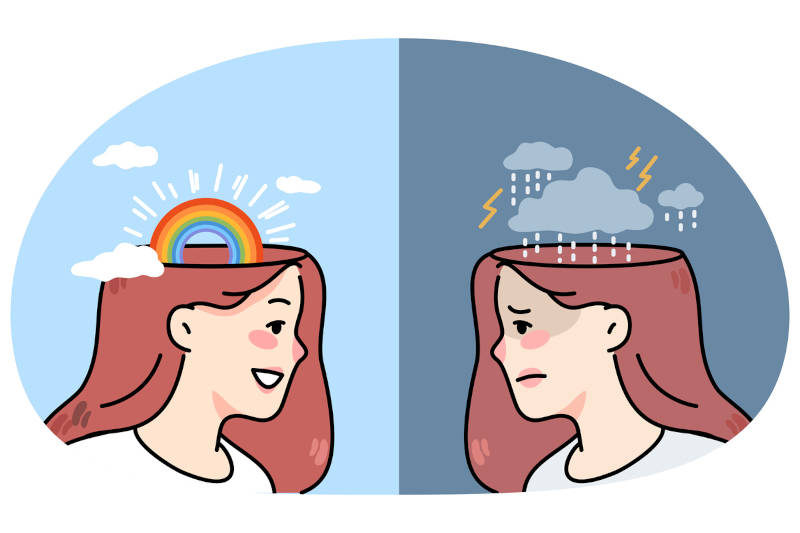
Bipolar disorder and depression can share many of the same symptoms, especially during a depressive episode. Both can affect mood, energy, sleep, concentration, motivation, and daily functioning. Because of these similarities, it is not always easy to tell the difference between them based on depressive symptoms alone.
The key distinction is that bipolar disorder involves significant shifts between depressive episodes and periods of elevated or unusually energized mood, while depression does not involve manic or hypomanic episodes. Understanding these differences can help people recognize when it may be time to seek a professional evaluation.
What is the main difference between bipolar disorder and depression?
The primary difference is the pattern of mood episodes.
Major depressive disorder, commonly called depression, primarily involves persistent periods of low mood or loss of interest and pleasure. Symptoms can include sadness, hopelessness, fatigue, changes in sleep or appetite, difficulty concentrating, feelings of worthlessness, and thoughts of death or suicide.
Bipolar disorder also includes depressive episodes, but it is characterized by episodes of mania or hypomania. During these periods, a person may experience unusually elevated, expansive, or irritable mood along with increased energy and activity.
This distinction is important because someone experiencing depression may actually have an underlying bipolar disorder that has not yet been recognized.
How does depression affect mood and behavior?
Depression typically causes a noticeable decrease in mood, energy, interest, and motivation.
Someone experiencing a depressive episode may withdraw from friends and family, lose interest in activities they once enjoyed, struggle to complete everyday responsibilities, or feel persistently hopeless. Physical symptoms can also occur, including fatigue, changes in appetite, sleep disturbances, and slowed movement or speech.
Depression can affect people differently, and not everyone experiences every symptom. Some people may appear to continue functioning at work or school while privately struggling with significant emotional distress.
Other mental health conditions, including anxiety, ADHD, borderline personality disorder (BPD), PTSD, and OCD, can also involve symptoms that overlap with depression. This is one reason professional assessment can be important when symptoms persist or interfere with daily life.
What does a depressive episode look like in bipolar disorder?
A depressive episode associated with bipolar disorder can look very similar to major depression.
A person may experience sadness, emptiness, hopelessness, low energy, difficulty concentrating, changes in sleep or appetite, loss of interest in activities, and feelings of guilt or worthlessness.
Because the depressive symptoms can be so similar, the distinction may not become apparent until a person experiences an episode of mania or hypomania.
For this reason, clinicians typically consider a person’s broader history rather than evaluating only their current mood. Past periods of unusually high energy, decreased need for sleep, impulsive behavior, or significant changes in mood can provide important information.
What are mania and hypomania in bipolar disorder?
Mania and hypomania are periods of unusually elevated, expansive, or irritable mood accompanied by increased energy or activity.
Mania is more severe and can cause substantial impairment in daily functioning. In some cases, it can involve psychotic symptoms or require hospitalization.
Hypomania is a less severe form of mood elevation. A person may feel unusually energetic, productive, confident, talkative, or socially active. They may sleep much less without feeling tired, have racing thoughts, or become more impulsive than usual.
Although hypomania may initially feel positive or productive, it can still cause problems with relationships, work, finances, or decision-making.
These episodes are what distinguish bipolar disorders from depressive disorders.
Can someone with bipolar disorder experience only depression?
Yes, a person with bipolar disorder may spend significant amounts of time experiencing depressive symptoms, particularly if manic or hypomanic episodes have not yet been recognized.
Someone may seek treatment because they are struggling with depression without realizing that previous periods of elevated mood were clinically significant.
For example, a person might remember times when they needed very little sleep, talked much more than usual, felt unusually driven or confident, started numerous projects, spent excessively, or behaved impulsively. If these periods represented mania or hypomania, they may provide important clues about the underlying condition.
This is why a thorough mental health evaluation should consider both current and past mood patterns.
How do sleep changes differ between bipolar disorder and depression?
Sleep changes can occur with both conditions, but the pattern can be different.
During depression, someone may sleep much more than usual or struggle with insomnia. They may feel exhausted even after spending many hours in bed.
During mania or hypomania, a person may have a decreased need for sleep rather than simply experiencing insomnia. They may sleep only a few hours and still feel unusually energetic or driven.
The combination of significantly reduced sleep and increased energy can be an important sign of a manic or hypomanic episode, particularly when it occurs alongside other changes in mood or behavior.
Can bipolar disorder be mistaken for depression?
Yes. Bipolar disorder can initially appear to be depression, especially when depressive episodes are more noticeable than periods of mania or hypomania.
A person may seek help for recurring depression without recognizing that their mood has also periodically shifted in the opposite direction. If bipolar disorder is not identified, treatment may not address the full pattern of symptoms.
This does not mean that every person with recurring depression has bipolar disorder. Rather, a clinician may consider bipolar disorder when someone reports a history of elevated or unusually irritable mood, increased energy, reduced need for sleep, impulsivity, or other symptoms associated with mania or hypomania.
How are bipolar disorder and depression diagnosed?
Neither condition can be diagnosed based on one symptom or a single mood episode.
A mental health professional typically considers the person’s symptoms, their duration and severity, how those symptoms affect daily functioning, and their personal and family mental health history. The clinician may also ask about previous periods of unusual energy, sleep changes, impulsive behavior, or elevated or irritable mood.
An accurate diagnosis matters because bipolar disorder and major depressive disorder can require different treatment approaches. A professional evaluation can also help identify co-occurring conditions and rule out other potential explanations for mood changes.
How are bipolar disorder and depression treated?
Treatment depends on the individual’s diagnosis, symptoms, history, and needs.
Depression may be treated with psychotherapy, medication, lifestyle changes, or a combination of approaches. Evidence-based therapies such as cognitive-behavioral therapy (CBT) can help people identify unhelpful thought patterns and develop healthier coping strategies.
Bipolar disorder treatment may involve mood-stabilizing medication, psychotherapy, education about mood patterns, and strategies for maintaining consistent sleep and routines. Treatment is generally focused on managing both depressive symptoms and episodes of mania or hypomania.
Therapy can also provide practical tools for recognizing changes in mood and responding to symptoms earlier. Depending on the person’s needs, approaches such as dialectical behavior therapy (DBT), group therapy, and other structured therapeutic services may be incorporated into treatment.
When should someone seek help for bipolar disorder or depression?
Professional support may be appropriate when mood symptoms persist, repeatedly return, interfere with relationships or responsibilities, or make everyday life difficult.
It is particularly important to seek an evaluation if periods of depression alternate with times of unusually high energy, decreased need for sleep, impulsivity, racing thoughts, or significant changes in behavior.
If you or someone you know is experiencing thoughts of suicide or an immediate mental health crisis, seek emergency assistance or call or text 988 for the Suicide & Crisis Lifeline.
How can Solutions Behavioral Health help with mood disorders?
Recognizing the difference between bipolar disorder and depression can be an important first step toward receiving appropriate care. You do not have to determine your diagnosis on your own. A mental health professional can help you understand your symptoms, identify patterns in your mood, and develop an individualized treatment plan.
Solutions Behavioral Health provides mental health treatment in Brookfield, Wisconsin, for adults experiencing a range of mental health concerns. Treatment may include structured outpatient services and evidence-based therapies designed around each person’s needs.
If you are struggling with depression, experiencing significant mood changes, or want help understanding whether your symptoms may be related to bipolar disorder, contact Solutions Behavioral Health at (262) 999-0871 to learn more about available treatment options.